This article provides an overview of PST's zirconium dioxide oxygen sensor range and interface components; you will find information regarding important features such as housing types, response times, gas temperatures, heater voltages and best suited applications for each product type.
Sensors
There are a number of things to consider when choosing a zirconium dioxide O2 oxygen sensor or electronic interface;
All of PST's zirconium dioxide sensors have an identical sensing cell, however the housing and specification varies. When choosing your sensor, consider the following:
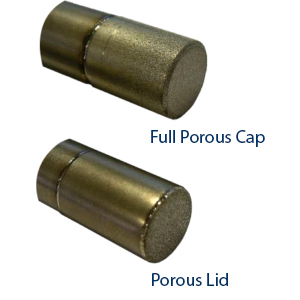
Cap type: The cap determines the sensor T10-90 response time. PST offers a choice of two different filters:
Full porous cap type which allows gas to enter the sensor from any direction resulting in a fast response time of < 4 seconds
Porous lid type where only the top (lid) part of the sensing enclosure is porous. The response time of this variant is <15 seconds
Housing style: the housing style you chose will vary depending on your application. PST offer four basic sensor types which will be covered later in this article.
Interface Boards and Instrumentation
PST can supply an interface board which provides the electronics necessary to power and control the zirconium dioxide oxygen sensor range. Alternatively, if you would rather have a complete solution, The OXY-FLEX or Oxygen Measurement System may better suit your needs. When choosing the option you require, consider the following:
O2 measurement Range
0.1 – 25% or 0.1 – 100%
Output Requirements
Digital (RS485 Modbus or RS232) or analogue (4-20mA or 0 – 10Vdc)
Location
Cable length is important to maintain the correct sensor heater voltage and minimize noise pickup, we recommend keeping the cable length between the sensor and interface board as short as possible.
Convenience
Do you want an “off-the-shelf” solution or to configure the equipment yourself?
Application
Consider the application environment in which your sensor will be working:
Environmental factors: Gas mixture, temperature, humidity and pressure levels have a direct bearing on the product you should select; for example, is the gas corrosive; high temperature; high moisture content; do you require barometric pressure compensation? Mounting: where the sensor and interface board is to be mounted can narrow the selection field:
Does the o2 oxygen sensor need to be sealed; is space a restrictive factor; if mounting in a flue, how thick is the wall?
Where will the interface board be mounted; do you need a housing; will it be accessible for calibration/maintenance?
Typical applications are listed throughout this article; they are given as examples only; they are NOT the only applications in which the sensors operate
Sensor Types
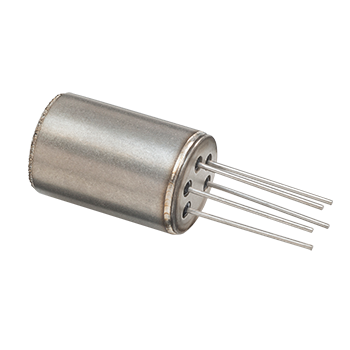
There are four basic sensor types within the ZrO2 family; Flange Mounted, Miniature, Probe Type and Screw Fit. The following gives a brief overview of each sensor.
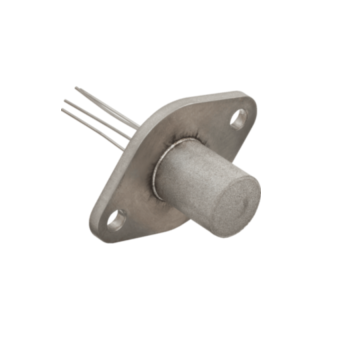
Flange Mounted Oxygen Sensor
Response time
T10-90 < 4 seconds (fast response sensor)
Heater voltage
4.35VDC
Gas temperature range
-100°C to +400°C
Mounting style
Flange mounted for easy sealing into a manifold or sampling chamber.
Typical applications
Favoured by PST’s aerospace customers, and those requiring high temperature and high pressure integrity.
Probe comes in three lengths; 80mm, 220mm and 400mm.
Typical applications
Longer probes are ideal for thicker walled flues.
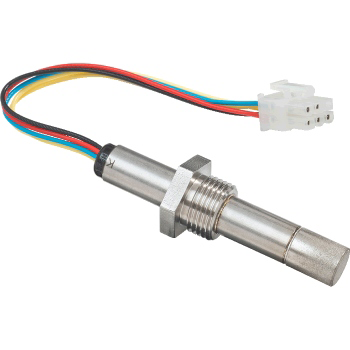
Screw Fit Oxygen Sensor
Response time
T10-90 <4 seconds (fast response sensor)
Heater voltage
4.35VDC (4.55VDC on BM range)
Gas temperature range
-100°C to +250°C
Probe insertion distance
28mm, 45mm or 55mm (relative to mounting nut).
Mounting style
M18x1.5 thread. Total probe length 75mm.
Typical applications
Boiler furnace efficiency optimisation for coal/oil/gas/biomass; controlled atmosphere monitoring
The above sensor types are PST’s “off-the-shelf” products. We also offer customisation on all of our products. If your specification is not listed above, please contact us. Our engineers will be happy to look at your application specifications and advise if we can customise a sensor to meet your requirements.
As mentioned previously in this article, all of our oxygen sensors require interface electronics to operate. You can find details for these products on the following links; OXY-LC Interface Board and O2I-FLEX Interface Board